A dedicated group of CBS enthusiasts, champions and collaborators.
Secretariat
Rémi Kaupp, Executive Director
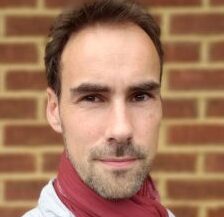
Rémi has been a CBS enthusiast for a long time and joined the CBSA in 2022. He brings experience in urban sanitation, innovative finance and supporting social enterprises from WaterAid and Homeless International. An engineer by training, he is passionate about finding solutions for sustainable cities, and loves nothing more than talking crap.
Isabella Montgomery, Programme Manager

Isabella has been part of CBSA since 2019, shaping the Alliance from its early days and now leading work to mainstream CBS by connecting evidence, policy and practice. She has worked with a range of global collectives across WASH, public health, and civil society engagement to advance inclusive, sustainable development – including Freshwater Action Network, the International Coalition for Trachoma Control and Together 2030.
Board
The CBSA Board includes three membership representatives, who rotate after two years, and four external, nominated representatives.
Dr Kory C. Russel, CBSA Co-Chair
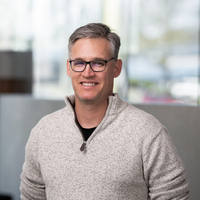
Kory C. Russel is the Chair of the CBSA and an Assistant Professor of Landscape Architecture and Environmental Studies at the University of Oregon. His work focuses on the design, implementation, and experience of non-networked water and sanitation services specifically in resource-constrained locations around the world. He served as a Peace Corps volunteer in Mozambique as well as helping to found both re.source sanitation and the Landscape for Humanity initiatives. Kory holds an MS and PhD in Civil and Environmental Engineering from Stanford University.
Dr Jeremy Gorelick, CBSA Co-Chair (nominated member)

Dr Jeremy Gorelick is a development finance practitioner with 20 years of experience in preparing and closing transactions in infrastructure in emerging markets. He has been responsible for raising over USD$4.3 billion for infrastructure projects in emerging markets, through his origination role on Wall Street and his positions as a municipal / infrastructure finance advisor with various aid agencies and DFIs. He has served as global technical expert on climate and/or infrastructure finance lead for multiple organisations, including the Bill & Melinda Gates Foundation, the World Bank, the IFC, USAID, GIZ, AFD, DFID, FCDO, BEIS, and the OECD among others. He received his PhD from the University of Cape Town with a focus on financial mobilisation for infrastructure in emerging markets and has lectured at the Johns Hopkins University since 2010 on emerging markets finance.
Clarissa Brocklehurst (nominated member)
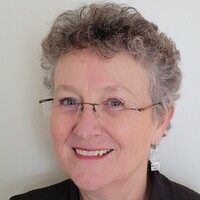
Clarissa Brocklehurst is a water supply, sanitation and hygiene specialist, with extensive experience in international development. She is an Adjunct Professor at the Department of Environmental Sciences and Engineering of the Gillings School of Global Public Health at the University of North Carolina at Chapel Hill. She previously served as the Chief of Water, Sanitation and Hygiene at UNICEF and helped establish the global Sanitation and Water for All partnership. Clarissa has also played a role in the development of strategy and advocacy for the global WASH sector and serves on several technical advisory groups for sector initiatives. As a consultant, she works for a variety of clients including the World Bank, UNICEF and WHO, and has advised governments on water and sanitation sector reform to benefit the poor.
Nancy Ngao (membership representative)

Nancy is the Government Affairs, Policy & Advocacy Lead at Fresh Life, with extensive experience shaping partnerships, policy, and advocacy to advance sustainable sanitation in Kenya. She has led engagement with government and civil society stakeholders, translating policy and research into actionable strategies. Previously, Nancy worked with 4-H Foundation Kenya, ZanaAfrica, and KikeTele on community development, public health, and youth programs. She holds a BSc in Community Resource Management and Public Health from Kenyatta University.
Samuel Opoku (membership representative)
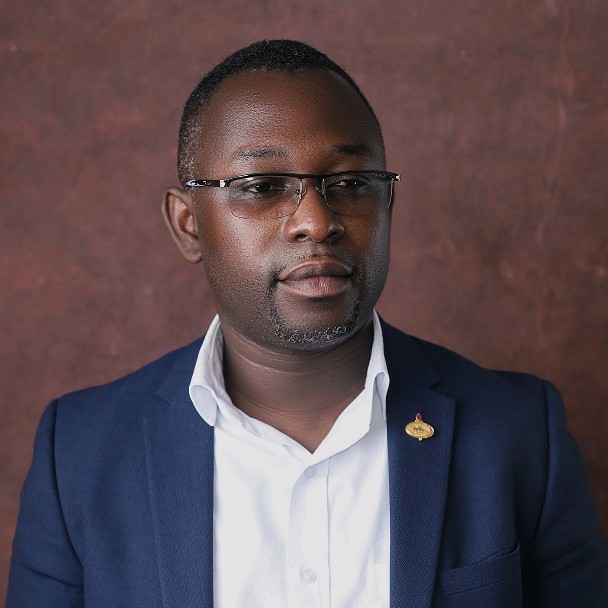
Samuel is the CEO of Clean Team Ghana, leading the organization’s operations and strategy to expand container-based sanitation services across the country. He has over four years of experience in finance and executive leadership, having previously served as Director of Finance and Head of Finance at Clean Team Ghana. Samuel holds an MBA and an MPhil in Accounting from Kwame Nkrumah University of Science and Technology, and brings deep expertise in financial management, operational strategy, and scaling sustainable sanitation solutions.
Arturo Llaxacondor (membership representative)
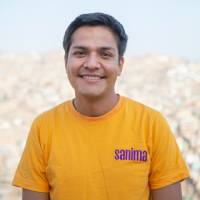
Arturo has been the CEO of Sanima, the largest waterless sanitation network in South America, since 2020. Previously, he served as Operations Manager and Customer Support Lead, optimizing services and strengthening user relationships. Under his leadership, Sanima has shifted its scaling strategy from growth to government adoption and is working on developing a partnership with the Ministry of Housing, Construction and Sanitation. In 2024, Sanima won the Grand Kunan Prize, Peru’s highest recognition for social and environmental entrepreneurship.
Jan Willem Rosenboom (nominated member)
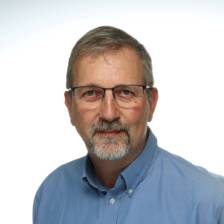
Jan Willem Rosenboom is a public health engineer with decades of experience across the water, sanitation and public health sectors, having worked with organisations including WaterAid, Oxfam, UNICEF, the World Bank and the Gates Foundation. Early in his career, he focused on rainwater harvesting, gravity-fed water supplies and rural sanitation in Kenya and Sierra Leone, before working on water quality, household water treatment, arsenic mitigation and sanitation marketing in Cambodia and Bangladesh. He joined the Gates Foundation in 2010, shaping its work on rural sanitation delivery and Citywide Inclusive Sanitation. During his 13 years there, he also led the development of results-based investments, contributed to sanitation policy and established a sanitation community of practice among grantees. He now works as an adviser and consultant to universities and sector agencies.